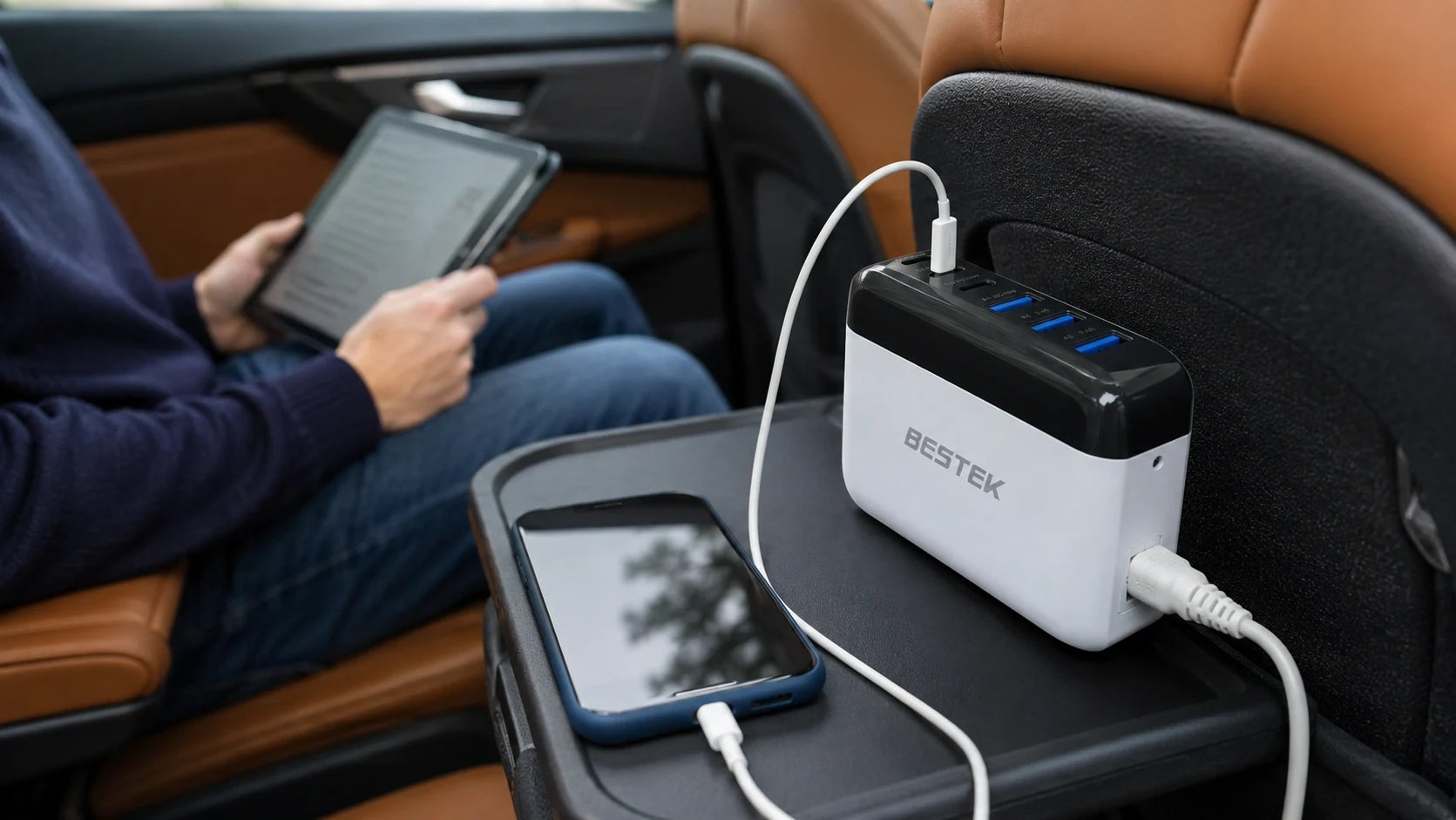
After a day of travel, it helps to know which lead belongs to the camera and which connection the next device needs. Make that small decision at home, with the labels in view.
At your destination, compare the actual supply and socket with the plan before connecting. This step-down converter is one possible part of a checked setup; its shape and included adapters do not settle every compatibility question.
A plug adapter changes the physical connection. A voltage converter changes voltage within its stated limits.
Read the input label, not the plug shape
Before packing a camera charger, toothbrush charger or another small appliance, find its input label. A label covering the destination’s supply voltage and frequency may mean the device only needs a suitable plug adapter, subject to its instructions. A single-voltage device may need a compatible voltage converter—or may be unsuitable for the trip. Do not decide from the connector shape or the country where you bought it. If the label is missing or unclear, contact the device manufacturer.
Plug shape and voltage answer different questions
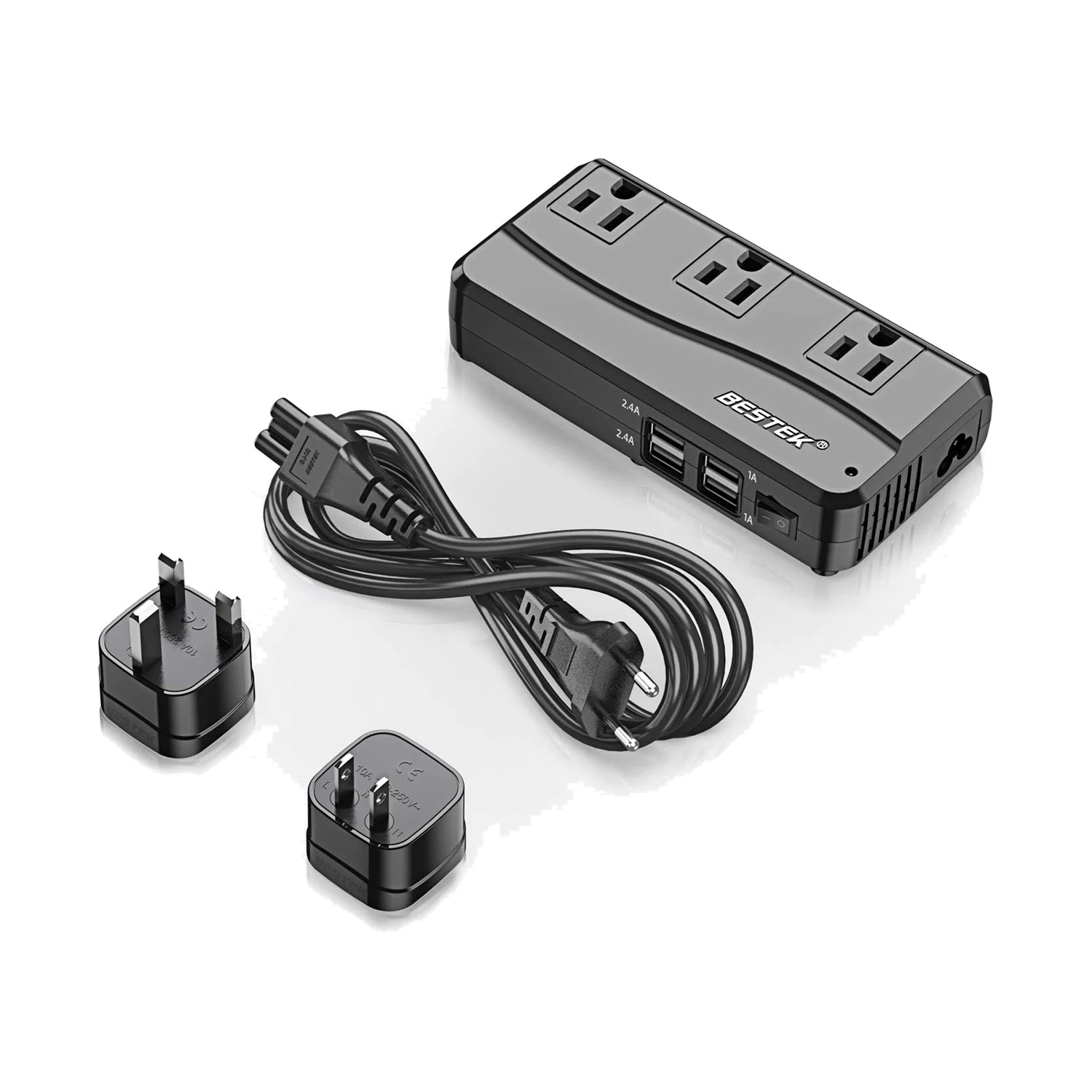
The supplied adapters address plug fit; the converter rating determines its electrical use. Check both.
Know what this converter is intended to do
The black BESTEK 200W travel converter is listed as a step-down model with three AC outlets and four USB-A ports. Its stated AC output is 110–120V. It is not a step-up supply for an appliance that requires 220–240V at its input. Check the input range printed on the actual converter and the destination’s supply before use. A voltage converter should not be assumed to change mains frequency, so a device’s frequency requirements still matter.
Make a label card for the trip
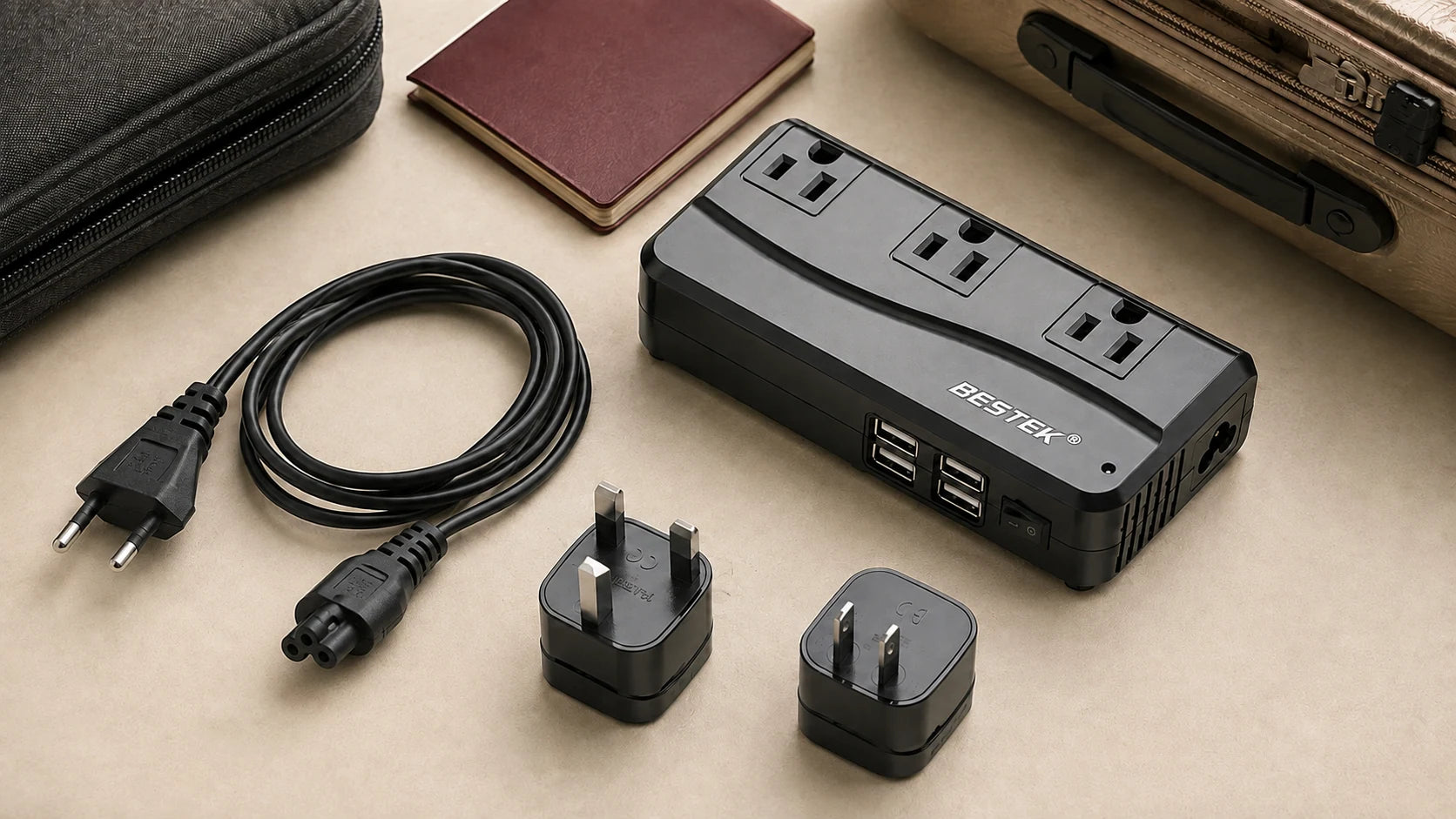
Create one line for each essential device: name, input voltage, frequency, input power information and required connection. Photograph the original label for reference. If the device uses a separate power adapter, record that adapter too, so you can identify the exact item you checked when packing.
For a multi-stop itinerary, add a column for each destination’s verified supply and socket type. A connection that suits the first hotel may not suit the next stop. Pack only the adapters your checked equipment requires, together with the converter manual and the correct device leads.
Treat the load as one shared budget
The listing instructs users to keep the total connected load below 200W. That allowance is shared, not 200W for each AC outlet. Include the equipment connected at the same time and follow any stricter limits in the product manual. This is not the right product for a hair dryer, straightener, curling iron or other high-power heating appliance: the listing specifically excludes those uses. The easiest packing decision is often to leave an incompatible appliance at home.
Check the destination connection
The listed kit includes UK, US and AU plug adapters and a cord with a European-style round-pin plug. That does not establish compatibility with every socket in every country. Check the exact socket type, grounding requirements and supplied accessories for your itinerary. Do not force a loose connection or stack adapters together. At the destination, keep the converter dry and ventilated on a stable surface, away from bedding and bathroom splash areas.
Make a short packing note
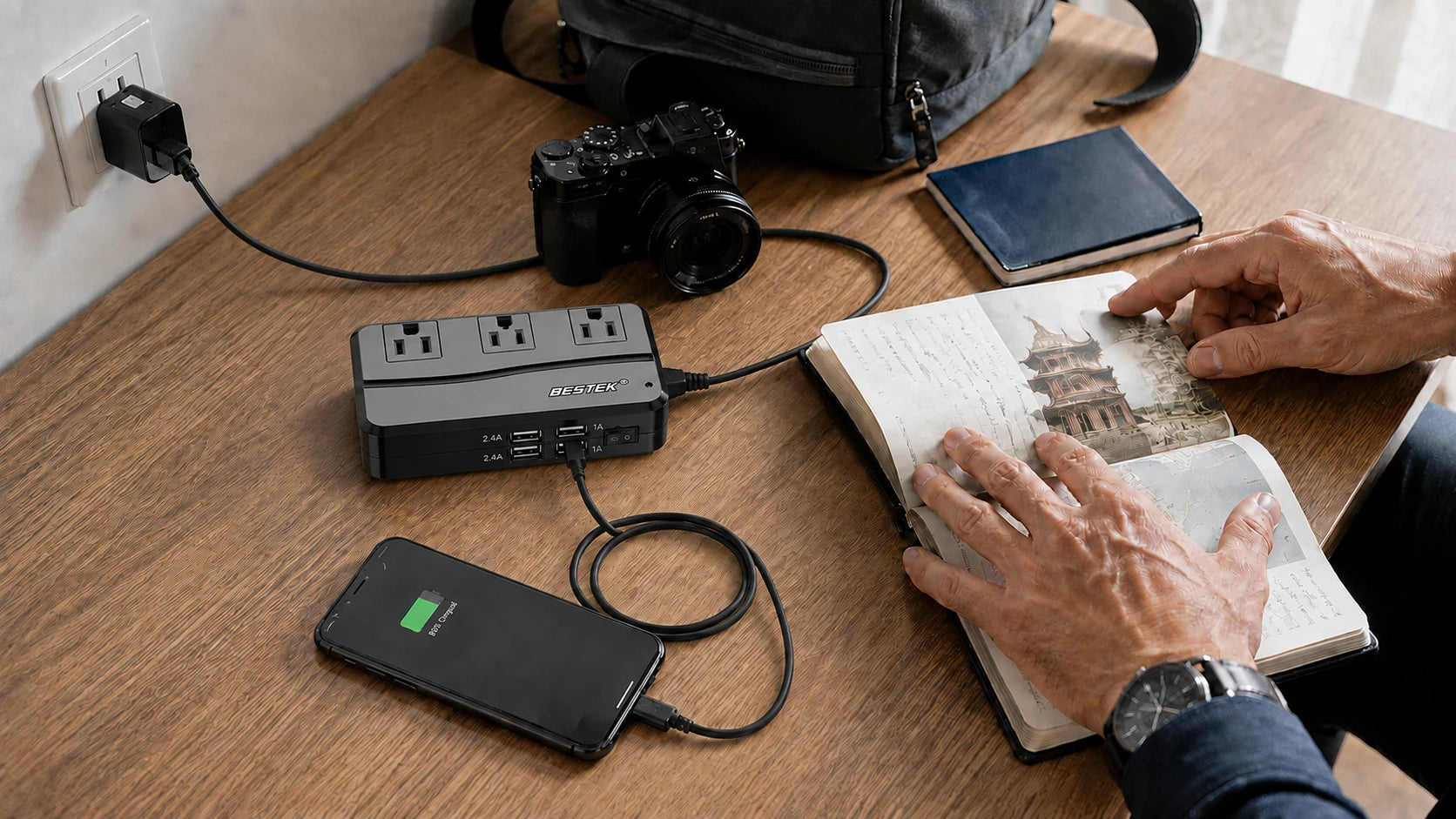
Write down the device names, their input ratings and which connection each requires. Pack the device’s correct charging cable with it. This small check is more useful than bringing a bag of adapters that happen to fit. The illustration shows an unplugged packing arrangement: it deliberately does not imply that a particular hotel socket or appliance has been tested with the converter.
Sort the devices before packing
| What the label says | Decision to make | Check before use |
|---|---|---|
| Accepts destination supply | Suitable plug connection | Frequency and grounding |
| Requires 110–120V input | Compatible step-down route | Converter input and total load |
| Requires 220–240V input only | Not this converter’s AC output | Another supported option |
| Missing or unclear | Ask the manufacturer | Do not guess from the plug |
A device must also meet the converter’s restrictions; matching voltage alone is insufficient.
Before you pack
Use this checklist while you review your equipment.
0 of 4 checked. Your checks stay in this tab only.
Common questions
Does a travel adapter reduce voltage?
A basic plug adapter does not. It changes the physical plug connection.
Will every dual-voltage device work?
You still need to match the destination voltage and frequency, use the correct plug connection and follow the device instructions.
Should every device go through the converter?
No. Decide from each device’s input label and instructions. A device that already accepts the destination supply may need only a suitable plug adapter.
Does the kit cover every hotel socket?
No universal fit is established here. Check the exact socket, grounding requirements and accessories supplied with your converter.
Sources and editorial notes
BESTEK product listing. Product facts checked September 7, 2026.
Scene images are AI-generated editorial illustrations, not test reports or installation diagrams. Follow actual labels and instructions.